
Will a Piano Tuning Fix My Piano?
When someone schedules a piano tuning, there’s often an understandable expectation that once the technician leaves, everything on the piano will be fixed.
While tuning is essential maintenance, it’s important to understand what it does — and what it doesn’t do.
Let’s clarify the difference.
What Piano Tuning Actually Is
A piano has over 200 strings held under thousands of pounds of tension. Over time, changes in temperature, humidity, and regular use cause those strings to drift out of pitch.
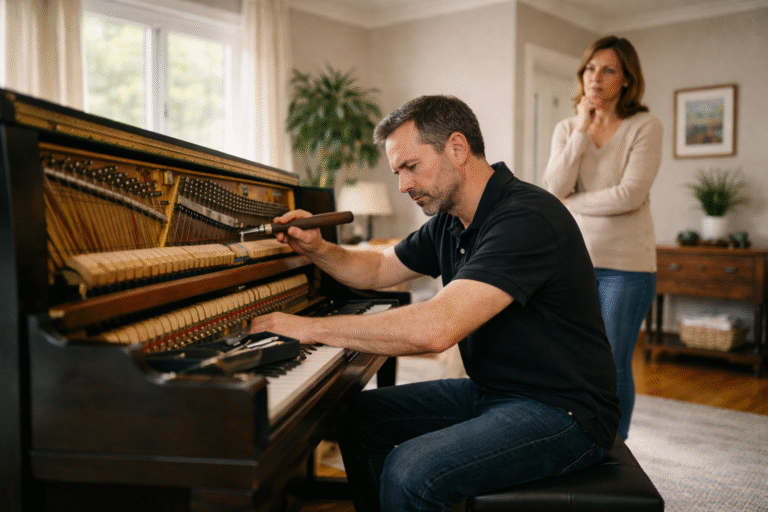
Tuning is the process of adjusting the tension of each string so the piano plays at the correct pitch and is in harmony with itself. A standard tuning appointment focuses specifically on:
- Adjusting string tension
- Bringing the piano up to pitch (if it has fallen flat)
- Fine-tuning intervals so chords sound clean and balanced
Tuning is about sound and pitch accuracy — not mechanical repair.
When a Piano Hasn’t Been Tuned in Years
Any piano that hasn’t been tuned for several years may require more than one visit to bring it properly up to pitch and complete a fine-tuning.
We’ve seen many instruments this winter that are 10 cents (or more) flat. In those cases, the process typically involves:
- Raising the piano to pitch
- Allowing the instrument to settle for a week or two
- Returning for a fine tuning
We won’t know whether this applies to your piano until it has been evaluated, but we want clients to be aware that multiple visits are sometimes necessary.
There is also a small risk of string breakage on instruments that have not been tuned in 10+ years. While this is uncommon, older strings under increased tension can occasionally fail during a pitch raise.
What Tuning Does Not Include
A piano is a complex mechanical instrument with thousands of moving parts. If something isn’t working properly, tuning alone will not correct it.
Tuning does not fix:
- Sticky or sluggish keys
- Broken strings
- Buzzing noises
- Clicking sounds
- Uneven key height
- Worn hammers
- Pedal problems
- Regulation issues (how the action responds to touch)
Think of tuning like adjusting the strings on a guitar. If a guitar has a cracked neck or faulty tuning pegs, tightening the strings won’t solve those underlying problems.
Why Problems Sometimes Show Up During Tuning
Often, small issues become noticeable during a tuning appointment. When a technician plays every key carefully, they may discover:
- Notes that don’t repeat properly
- Keys that hesitate
- Weak or uneven tone
- Mechanical wear that wasn’t obvious before
This doesn’t mean something “went wrong” during tuning. It simply means the instrument is being carefully evaluated as it’s serviced.
The Three Main Categories of Piano Service
To understand your piano’s needs, it helps to know the difference between these services:
1. Tuning
Adjusting string tension so the piano is in pitch.
2. Regulation
Adjusting the mechanical action so keys respond evenly and properly.
3. Repair
Fixing or replacing broken, worn, or damaged parts.
Each serves a different purpose. A well-maintained piano typically needs all three at different times in its life.
“But It Was Tuned — Why Doesn’t It Feel Better?”
This is one of the most common questions we hear.
If your piano feels uneven, stiff, or difficult to control, the issue is likely mechanical — not related to pitch. Regulation and repair address how the piano feels and responds to your touch.
Tuning makes your piano sound right.
Regulation makes your piano feel right.
Repair makes your piano work right.
Why Regular Maintenance Matters
When a piano goes several years without service, it may need more than a single tuning appointment. For example, if the instrument is significantly flat, it may require:
- A pitch raise
- Time to settle
- A follow-up fine tuning
Instruments that have been neglected may also reveal mechanical wear that has developed gradually over time.
Regular annual service helps prevent small issues from becoming larger, more expensive problems.
Our Goal: Clarity, Not Surprises
When we tune a piano, our primary goal is to bring it into proper pitch and evaluate its overall condition. If we notice mechanical issues or repairs that may be needed, we’ll explain them clearly and provide options.
We believe informed customers make the best decisions for their instruments.
A piano is both a musical instrument and a precision machine. Tuning is essential — but it’s only one part of proper care.
If you ever have questions about what your piano needs, we’re always happy to talk through it.