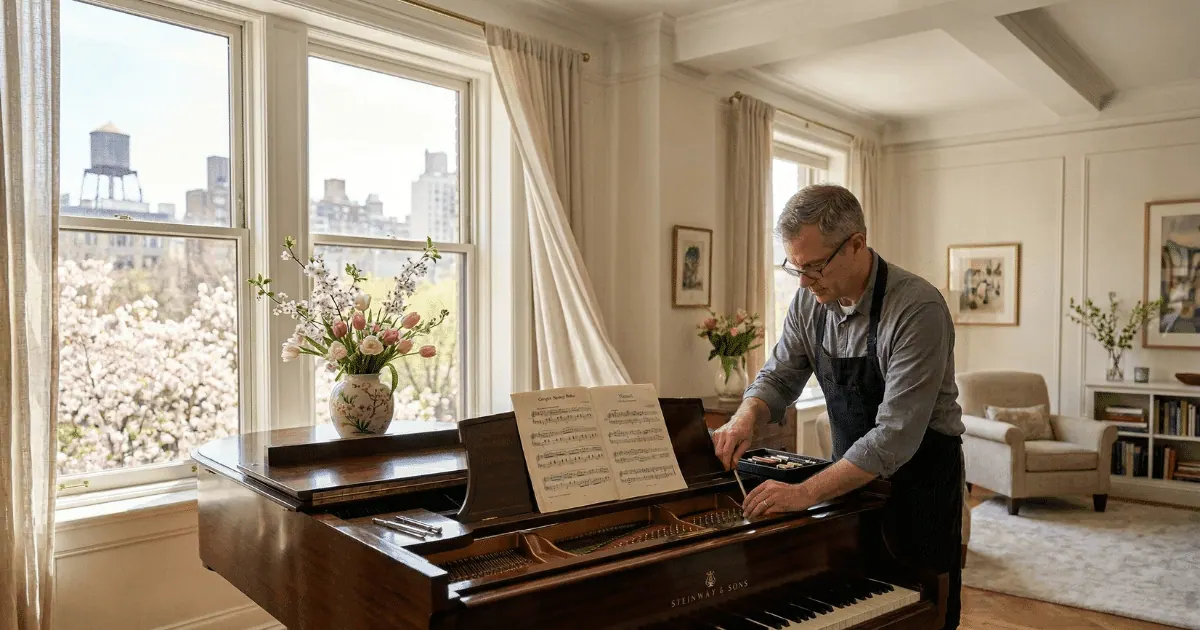

Why Your Piano Goes Out of Tune in Summer?
As the temperatures rise and humidity levels fluctuate, your piano goes out of tune in summer, develops sticky keys, or even suffers long-term structural damage. Whether your piano lives in a climate-controlled home, a church sanctuary, a school auditorium, or a country club, understanding how summer weather affects the instrument can help preserve its tone, touch, and longevity.
How Heat and Humidity Affect a Piano
A piano is made primarily of wood, felt, steel, and glue — all materials that react to environmental changes. During the summer months, increased humidity causes the wooden components inside the piano to absorb moisture and expand.
The most sensitive part is the soundboard, the large wooden panel responsible for amplifying sound. When humidity rises, the soundboard swells, increasing string tension and causing the piano to sound sharp. When the air later dries out, the soundboard contracts and the pitch drop flat again.
Frequent swings between humid and dry conditions can lead to:
- Unstable tuning
- Sticky or sluggish keys
- Clicking or buzzing sounds
- Cracked soundboards or bridges
- Premature wear on action parts
Even a few weeks of excessive moisture can noticeably affect how a piano feels and sounds.
Signs Your Piano Needs Summer Service
Many piano owners wait until the instrument sounds obviously out of tune, but subtle warning signs often appear first.
Watch for:
- Keys that feel slower or uneven
- Notes that “twang” or produces a metallic tone
- Pedals squeaking or sticking
- Damp or musty odors near the piano
- Difficulty maintaining tuning stability
- Changes in touch sensitivity
If your piano receives heavy use — such as in performance venues, teaching studios, or event spaces — seasonal servicing becomes even more important.
Ideal Humidity Levels for Pianos
Most technicians recommend maintaining indoor humidity between 40% and 50% year-round. Sudden fluctuations are often more harmful than consistently high or low levels.
A piano goes out of tune in summer due to heat and humidity — here’s how to minimize the damage:
- Use air conditioning when possible
- Avoid placing the piano near open windows or exterior doors
- Keep the piano away from direct sunlight
- Use a hygrometer to monitor room humidity
- Consider a piano humidity control system for sensitive environments
Grand pianos and high-end uprights especially benefit from a professionally installed humidity-control system, which helps maintain a stable environment inside the piano regardless of seasonal weather changes. By regulating moisture levels around the soundboard and action, these systems can improve tuning stability, reduce the risk of cracks or sticking keys, and help preserve the instrument’s tone and touch year-round.
Beyond Tuning: Complete Seasonal Maintenance
A tuning appointment is also an opportunity for a technician to inspect the overall health of the instrument.
Summer maintenance may include:
- Action regulation adjustments
- Key easing for sticky keys
- Pedal lubrication
- Cleaning dust buildup inside the piano
- Checking for signs of moths or excessive moisture
- Evaluating string and pin condition
Preventive maintenance of a piano is often far less expensive than repairing humidity-related damage later.
Protecting Your Piano for the Long Term
A well-maintained piano can last generations. Seasonal care not only improves sound quality and touch but also protects the substantial investment represented by the instrument.
Summer weather may be unavoidable, but with proper maintenance and environmental control, your piano can continue performing beautifully through every season.
If you would like to schedule a tuning appointment or discuss a maintenance plan for your piano, please get in touch through our contact form or call 914 830 3058.
More Blogs