
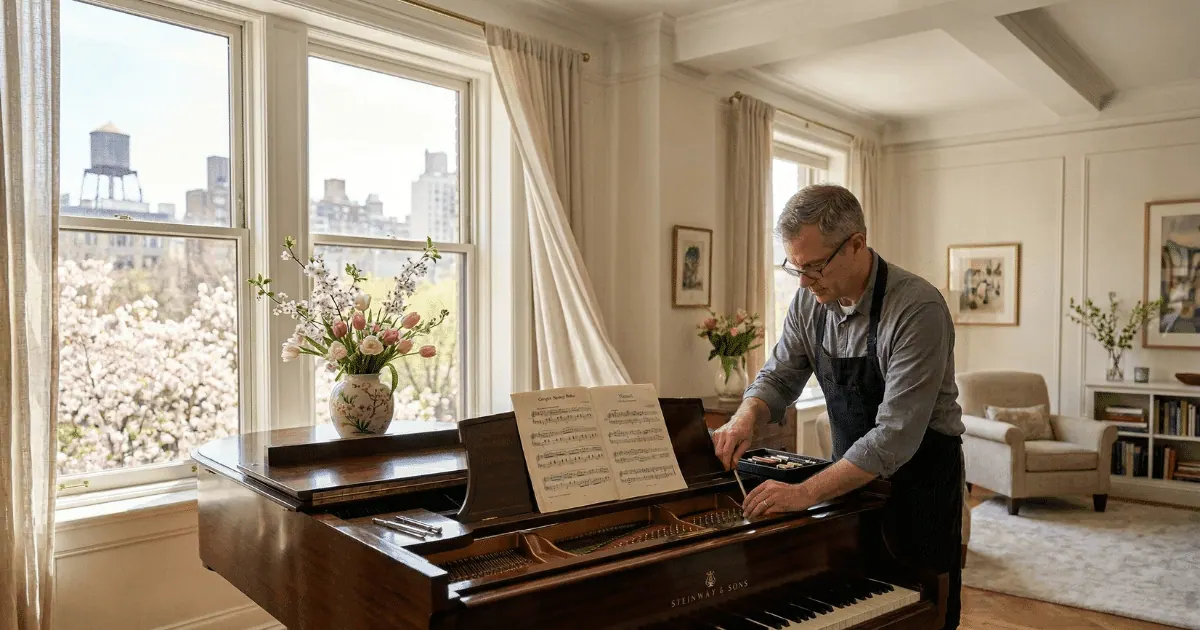
Spring Piano Tuning: Why April and May Matter Most in New York
If you own a piano in New York or the Tri-State area, spring is one of the most important times of year to schedule a tuning. As the long winter ends and humidity begins to rise, the internal structure of your piano goes through significant seasonal changes. For many technicians, April and May are the ideal months to bring a piano back into balance after winter.
Here’s why spring tuning matters so much for pianos in New York homes.
Winter Leaves Your Piano Dry and Out of Tune
During the winter months, indoor heating systems significantly reduce humidity in most homes. Forced-air heat, radiators, and wood stoves all create very dry indoor conditions, which can affect the wooden components of a piano.
The soundboard, which is the heart of the instrument’s tone, naturally shrinks slightly when the air becomes dry. When this happens, it reduces tension on the strings, and the piano typically goes flat (lower in pitch).
Even if the piano isn’t played very often, these environmental changes can gradually pull it out of tune over the course of the winter.
Spring Humidity Changes Everything
As winter fades and temperatures rise, it starts to rain and humidity begins to return to the air. In New York, this shift usually becomes noticeable in April.
When humidity increases:
- The soundboard absorbs moisture
- The wood expands slightly
- String tension increases
- The pitch of the piano tends to rise
Because these seasonal changes affect the entire structure of the instrument, spring is the perfect time to reset the tuning and stabilize the piano for the months ahead.
Why April and May Are Ideal
Early spring is often the most stable window between the extreme dryness of winter and the heavy humidity of summer.
Scheduling a tuning in April or May helps your piano:
- Recover from winter pitch drop
- Adjust smoothly to rising humidity
- Stay closer to proper pitch through the summer
- Maintain better tuning stability overall
Waiting until late summer can sometimes mean the piano has already drifted significantly in pitch, which may require additional correction during tuning.
Spring Is Also a Busy Piano Season
Many households naturally return to music in the spring. Students are preparing for recitals, exams, and end-of-year performances, and families often host gatherings where the piano gets more use.
A fresh tuning ensures that:
- Practice sessions are more enjoyable
- Teachers and students hear accurate pitch
- The piano sounds its best for performances and guests
Consistent Seasonal Tunings Work Best
For many New York piano owners, the most effective maintenance schedule is two to three tunings per year, timed around the region’s seasonal humidity changes:
- Spring (April–May) – Corrects the pitch drop caused by the dry winter months and prepares the piano for rising humidity.
- Fall (September–October) – Stabilizes the piano before the indoor heating season begins and humidity levels drop again.
- Winter (January–February) – A good time to install a Dampp-Chaser humidity control system if you haven’t already. This system helps regulate the humidity levels inside the piano and can significantly improve tuning stability throughout the year.
Following a seasonal schedule like this helps keep the instrument closer to proper pitch year-round and reduces the need for larger pitch corrections during tunings.
Related Read:
Understanding What a Piano Tuning Does
While tuning restores the correct pitch and harmony between the strings, it does not address every aspect of piano performance. Issues such as uneven touch, sluggish keys, or worn action parts require additional services like regulation or repair.
If you’re interested in learning more about the process, we’ve also written a separate article that takes a deeper dive into what a piano tuning does—and what it doesn’t do.
More Blogs


