

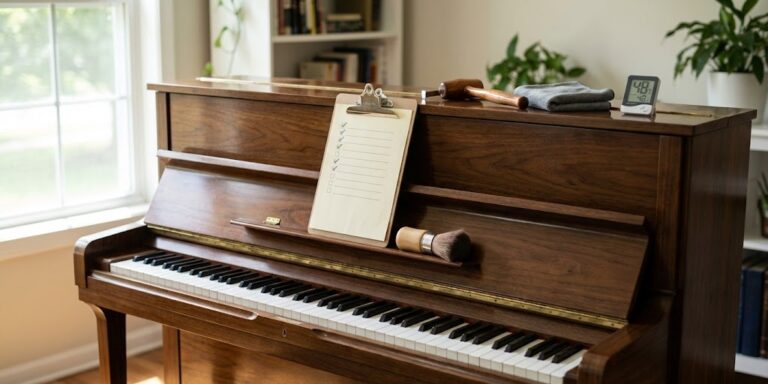
A well-maintained piano doesn’t just sound better—it lasts longer, holds its value, and brings joy every time you sit down to play. Whether your piano is a cherished family heirloom, a recent purchase, or a professional instrument, regular care is essential. This complete piano maintenance checklist will help you understand what your piano needs throughout the year and how to keep it performing at its best.
Why Piano Maintenance Matters
Pianos are intricate acoustic machines with more than 10,000 moving parts. Changes in humidity, temperature, and regular use all affect their sound and structural health. Without routine care, problems like sticky keys, tuning instability, and premature wear can appear. Consistent maintenance not only preserves the beauty of your instrument—it also protects your investment.
1. Schedule Regular Piano Tunings
How often should you tune a piano?
Most manufacturers recommend tuning at least twice a year. Seasonal changes in humidity cause the soundboard to expand and contract, affecting pitch. Homes with fluctuating temperatures or heavily used instruments may require more frequent tuning.
Pro tip:
Be sure to hire a certified piano technician to ensure proper tuning and to catch early signs of mechanical issues.
2. Maintain Proper Humidity Levels
Humidity control is one of the most important factors in piano care.
Ideal humidity range: 40%–60% relative humidity
Why humidity matters:
- Too dry → soundboard shrinkage, loose tuning pins, sluggish action
- Too humid → swelling wood, sticking keys, mold.
Solutions:
- Use a room humidifier or dehumidifier
- Install a piano humidification system for year-round stability
3. Keep Your Piano Clean—Inside and Out
Exterior care:
- Dust the piano weekly using a soft microfiber cloth.
- Avoid aerosol polishes—use cleaning products specifically made for piano finishes.
- Keep liquids, plants, and candles off the piano to prevent spills or damage.
Keyboard cleaning:
- Wipe keys regularly with a slightly damp cloth, then dry immediately.
- Never use harsh chemicals or alcohol-based cleaners.
Internal cleaning:
Have a technician clean the interior during routine piano maintenance. Never attempt to clean the inside of the piano yourself- it requires special tools and skills- serious damage to the soundboard and strings can occur with improper cleaning. Dust and debris inside the action can lead to premature wear and uneven key response, should be cleaned and evaluated by your technician during your regular service call.
4. Protect Your Piano’s Placement
Where you put your piano matters just as much as how you care for it.
Best location:
- Away from direct sunlight
- Away from fireplaces, heating vents, and exterior doors
- On an inside wall, ideally in a climate-controlled room
Environmental stability helps maintain tuning and prevents structural damage.
5. Inspect the Piano Action and Keys
Every year (or during each tuning appointment), ask your technician to inspect:
- Hammer wear
- Regulation issues (key height, hammer alignment, action responsiveness)
- Damper function
- Any sticking or sluggish keys
Proper regulation keeps your piano responsive, balanced, and enjoyable to play.
6. Check the Pedals and Hardware
Pedals should move smoothly and quietly. Squeaks, clicks, or loose hardware usually indicate that adjustments or lubrication are needed. A technician can ensure everything is functioning properly and make small repairs before they become big problems.
7. Plan for Professional Deep Maintenance
Every few years, your piano may need additional attention beyond standard tuning:
Common deep maintenance services:
- Voicing: Adjusting hammer felt for a more even, expressive tone
- Regulation: Fine-tuning the keyboard and action mechanism
- Hammer reshaping or replacement
- String replacement (for older or heavily used pianos)
These services dramatically improve the instrument’s touch and sound, especially for serious players.
8. Use Professional Movers for Any Relocation
Pianos are heavy, delicate instruments. Whether moving across the room or across the state, always hire licensed and fully insured piano movers. This prevents damage to the piano, your floors, and your home—and ensures your instrument stays structurally sound.
9. Keep a Piano Maintenance Log
Tracking your tunings, repairs, humidity levels, and technician notes helps you stay ahead of issues and provides helpful documentation, especially if you ever sell the piano.
Final Thoughts
Your piano is more than furniture—it’s a living instrument that thrives with consistent care. By following this comprehensive piano maintenance checklist, you’ll enjoy beautiful tone, reliable performance, and decades of music from your instrument.
If you’re located in NY Tri-State area, our certified technicians are here to help with expert tuning, repairs, humidification systems, and professional moving services. Contact us anytime to schedule your next appointment and keep your piano in concert-ready condition.
Contact Us: info@westchesterpiano.com