
If you ask any piano technician for the number one secret to keeping a piano healthy and sounding beautiful year after year, the answer is almost always the same: humidity control. While tuning, cleaning, and regular servicing all play a significant role, maintaining a stable humidity level is what truly protects the piano’s internal health. Here’s why humidity control matters, what happens to your piano during the cold months, and how to keep it performing at its best.
Why Humidity Matters So Much for Pianos
A piano is primarily made of wood, felt, and metal. Wood is extremely sensitive to moisture in the air—it expands when humidity rises and contracts when humidity drops. Even small swings can impact your piano’s tuning stability, tone, and structural integrity.
The ideal humidity level for a piano is 40–60% relative humidity.
When humidity stays in this range, the piano remains stable. But when it fluctuates? Problems start to appear.
The Hidden Damage Winter Can Cause
Winter brings with it dry cold air, but also means radiator heat, forced air and other types of heaters which can exacerbate the extreme dryness in your home.
1. Indoor Heating Causes Very Dry Air
Forced-air heating and radiators often drop indoor humidity levels to 20% or lower, far below the recommended range. This sudden dryness pulls moisture out of the piano’s wooden components.
2. Wood Shrinks
Rapid drying causes:
- Soundboard shrinkage
- Loose tuning pins
- Cracks in the soundboard or bridges
- Key and action misalignment and sticking
These changes may start subtly but can accelerate over a few weeks in extreme conditions.
3. The Piano Won’t Stay in Tune
A shrinking soundboard reduces tension on the strings, resulting in a piano that sounds flat and unstable. Many piano owners notice they need tunings more frequently in winter due to this. Wood in the pinblock where the piano’s pins are held also contracts, meaning the string tension can be less stable
4. Keys Become Sluggish or Noisy
Dryness can lead to:
- Clicking noises
- Dry action centers
- Keys that don’t return properly
- Uneven touch
These symptoms often worsen if not addressed.
5. Glue Joints May Weaken
When wood dries too much, the glue holding various components together can loosen—leading to bigger repairs later.
How to Protect Your Piano During the Winter Months
Fortunately, winter-related damage is 100% preventable with good humidity management.
1. Use a Room Humidifier
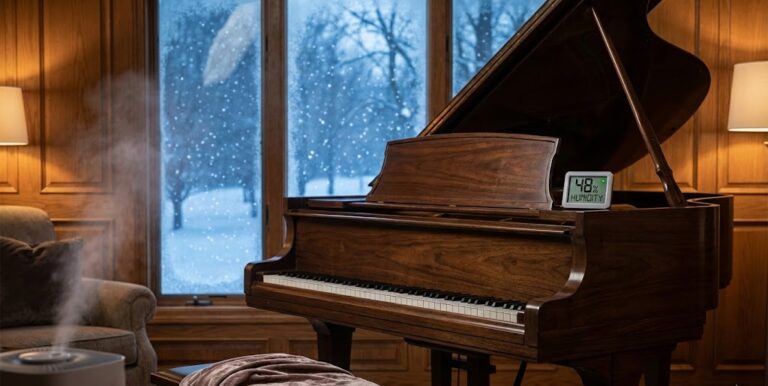
This is the simplest option. Keeping the room between 40–60% RH helps the entire piano stay stable. Make sure to use a hygrometer to monitor levels.
2. Install a Piano Humidification System
Technicians often recommend systems like the Dampp-Chaser Piano Life Saver, especially for grand and upright pianos in climates with severe seasonal swings.
These systems:
- Add moisture when the air is dry
- Remove moisture when humidity rises
- Keep your piano in a stable microclimate year-round
- Have a sensor to inform you when the system needs replenishment
It’s the most effective long-term solution and we can help! Contact us at info@westchesterpiano.com to arrange for the installation of a humidification system.
3. Place Your Piano Wisely
Where your piano sits in the room matters:
- Avoid heating vents, fireplaces, and radiators
- Keep away from drafty windows or exterior doors
- Avoid areas in the home that would expose your piano in direct sunlight
A stable environment = a stable piano.
4. Schedule Winter Maintenance
A winter tuning is important. Your technician can also check:
- Humidity levels
- Action responsiveness
- Loose pins
- Tone changes
- Early signs of soundboard and bridge failures
Spotting problems early prevents expensive repairs later.
Benefits of Proper Humidity Control
When you keep humidity steady, your piano rewards you with:
 Longer lifespan of wooden components More stable tuning year-round Consistent tone and touch Fewer mechanical problems Reduced risk of cracks, warping, and pinblock issues
A better sounding instrument which is more inspiring to play
Humidity control is one of the easiest ways to protect your investment and ensure your piano sounds beautiful for generations.
Final Thoughts
The true secret to a long-lasting piano isn’t a mystery—it’s maintaining consistent humidity, especially during the dry winter season. With a few simple steps, you can protect your instrument from costly damage, preserve its tone, and keep it in peak playing condition all year long.
If you’re in NY tri-state areas, we can help assess your piano’s environment, recommend humidification solutions, install humidity control systems, or schedule seasonal maintenance.
Keeping your piano healthy doesn’t have to be complicated—and we’re here to make it easy.
Email: info@westchesterpiano.com
Call: 914-830-3058