

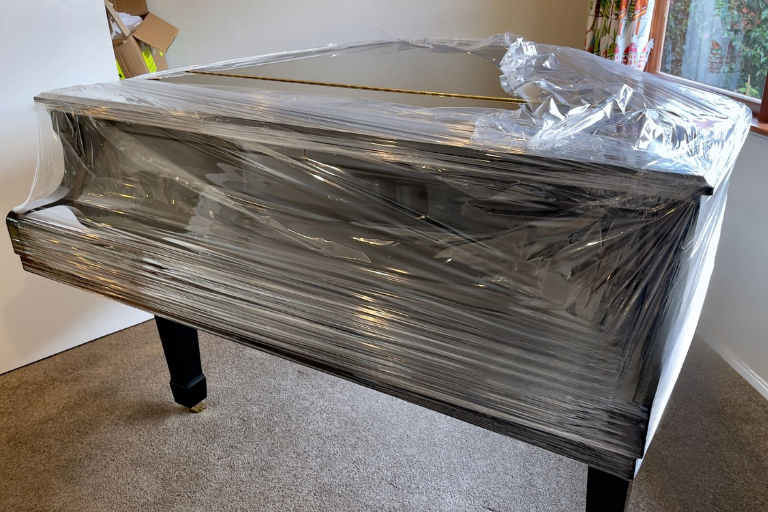
Moving a piano isn’t like moving a sofa, a dresser, or even a refrigerator—it’s a completely different operation. With hundreds of pounds of weight, delicate internal mechanisms, and a structure designed for sound rather than mobility, a piano requires specialized care. Whether you’re moving across the room or across the country, here’s everything you absolutely must do first to protect your instrument, your home, and your wallet.
1. Understand Why Piano Moving Is Not a DIY Job
Pianos may look solid from the outside, but they are surprisingly fragile:
- The legs can crack under improper lifting
- The harp and soundboard are extremely sensitive to jolts
- Pianos can weigh, in some instances over 1000lbs and can be top heavy, leading to unsafe moving conditions for those without proper tools and training.
- Keys, action parts, and pedals can shift during transport and require adjustment by professionals to operate properly upon delivery
- Incorrect handling can cause irreversible cosmetical and operational damage
- Even a “simple” move from one room to another can go wrong quickly.
Professional piano movers bring specialized equipment, dollies, padding, ramps, and the training needed to move your piano safely—without guesswork.
2. ALWAYS Choose Licensed & Fully Bonded Piano Movers
This is the most important decision you’ll make.
Why licensing matters:
Licensed movers must meet safety and operational requirements. This protects you from risks such as property damage, injuries, or improper handling. Not all movers are experienced piano movers! In fact, most piano movers specialize in just that and have the tools and crew specialized for the demands on pianos specifically.
3. Why having an owner- operated move team is key?
If you’ve run a small business you’ll know- nobody takes your businesses interest, liabilities, and reputation as seriously as you do. At Westchester piano, all of our piano move teams are owner-operated. We personally know the movers coming into your house and can vouch for their quality and professionalism.
Why being fully bonded matters:
Bonded movers have financial protections in place to cover accidents, damage, or negligent behavior.
If something goes wrong, you’re not left paying the bill.
Warning signs to avoid:
- Movers who refuse to show proof of insurance
- Companies offering suspiciously low prices
- Movers with no piano-specific experience
- General movers who claim “we’ve done a few pianos before”
Your piano is too valuable to gamble with.
3. Measure Everything—Including the Pathway
Before the movers arrive, do a quick walkthrough:
- Measure doorways
- Clear hallways
- Remove rugs, décor, or anything on the floor
- Check for tight corners
- Ensure steps, porches, and landings are accessible and free of ice and snow
Professional movers will also do this, but preparing ahead of time helps avoid delays and surprises.
4. Protect the Piano’s Environment Before and After the Move
Pianos are extremely sensitive to humidity and temperature changes, especially during a move.
Before the move:
- Secure pets and remove obstacles from entrances
- Prepare rugs or furniture cups you’d like under the piano
After the move:
- Allow the piano to acclimate for at least a week
- Schedule a tuning once the piano settles into its new home
- Monitor humidity and try to keep within an ideal range of 40–50% relative humidity
5. Communicate With Your Movers Clearly
Let the movers know in advance:
- The best contact number for the day of delivery so the movers can keep in touch about timelines and reach out if there is any issue finding your location
- Whether your piano is an upright or grand
- If there are stairs, narrow halls, or tight turns
- If the destination has special conditions (basement, upstairs, elevator, etc.)
- If any specific insurance requirements must be send in ahead of time, such as a COI- Certificate of Insurance
- If any rules or regulations of the building management must be adhered to such as a specific freight elevator, parking instructions or time frames allowed for move in, move out
The more information they have, the smoother the move will be and
6. Don’t Forget to Prepare the Area in Your New Space
Before the movers arrive at the destination:
- Consider the best location possible, trying to avoid heating vents, radiators, fireplaces, doors that open to the outside, and drafty windows as much as your options allow.
- Ensure the floor can support the piano
- If any protection from the wheels might be necessary on the floor surfaces
The last thing you want is to have to hire the movers to come back again because you’ve reconsidered the location of your new piano after delivery.
7. Schedule a Post-Move Tuning
Every piano goes slightly out of tune after a move—not because of jostling, but because of the change in temperature and humidity when acclimating to its new home
Plan to tune your piano 2–3 weeks after the move, once it has fully acclimated, this means scheduling your tuning appointment shortly after delivery, as most piano technicians book weeks out. Your technician can also check for any issues caused by the new environment or the move.
Final Thoughts
Moving a piano is a big job, and doing it right is the key to protecting your instrument. The very first and most important step is hiring licensed and fully bonded piano movers—not general movers, not “guys with a truck,” but specialists who know exactly how to care for your piano.
When you combine professional movers with proper preparation, environmental care, and follow-up tuning, your piano will arrive safely and continue to perform beautifully for years to come.
If you’re moving within Westchester County or the surrounding areas, we can help arrange safe, professional piano moving services through trusted licensed movers—and handle tuning and setup once your piano arrives.
Ready to move your piano with confidence? Reach out anytime.